The need: making material expertise easier to discover
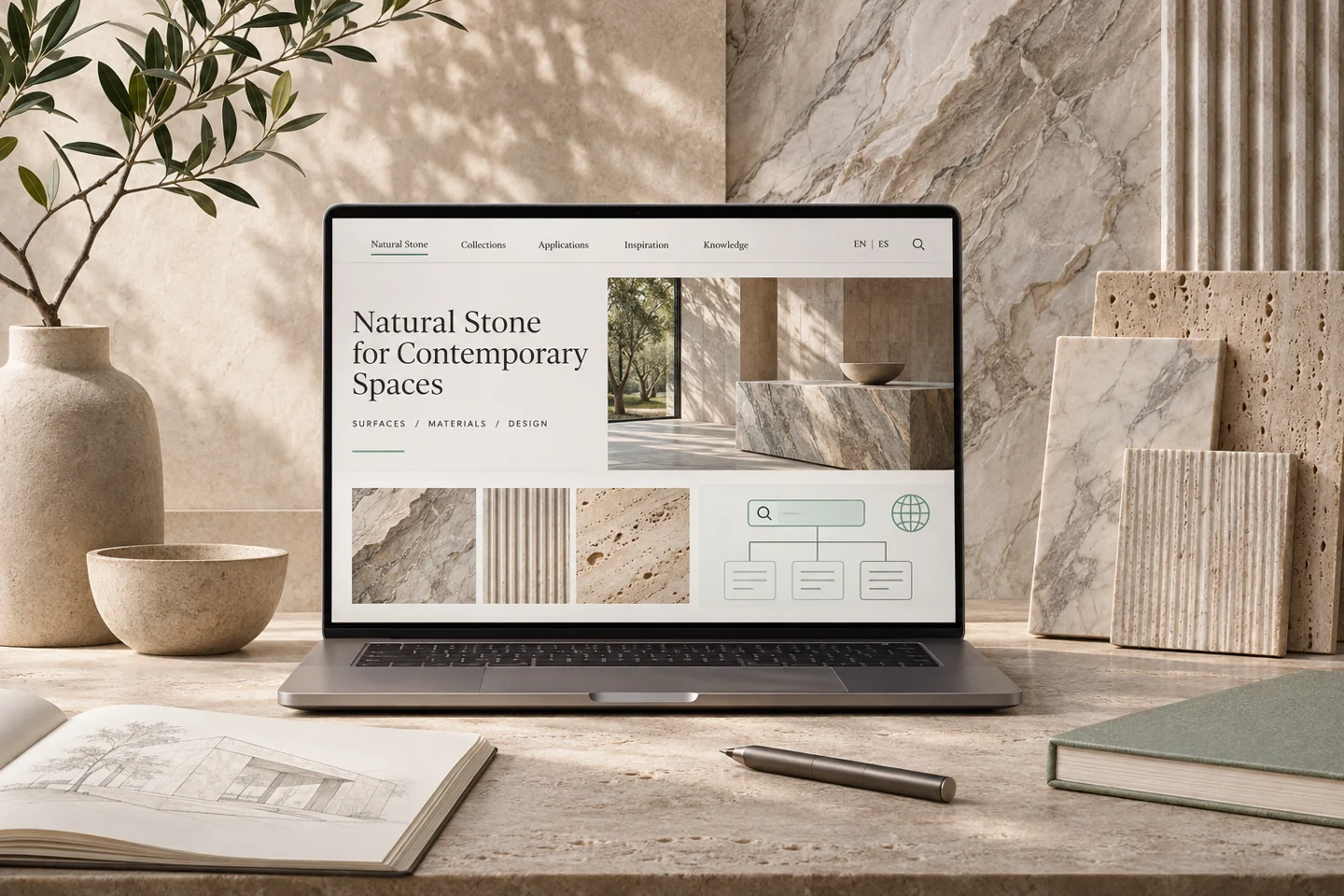
Marmix Natural Stone presents natural stone collections for architectural surfaces and decorative applications. A website in this sector must do more than create visual impact. Visitors need to understand the material, its potential application and the information to request next.
We approached the work through technical SEO and AI visibility, content architecture and the web experience. Live-site analysis and the Google connection are separate from the bilingual pages and Journal prepared in a development preview. This case study does not represent that preview as an already published redesign or claim a measured ranking improvement.
Technical SEO: distinct page roles and consistent URLs
The initial review considered the homepage, product pages, sitemap, robots.txt, linked styles and image resources together. URL variants, canonical signals, titles and descriptions, language counterparts and structured data were key checks. A product page and a supporting guide should answer different questions, rather than repeat the same copy.
In the bilingual preview, Turkish and English content was paired through separate, readable HTML URLs. Canonical addresses, reciprocal hreflang, descriptions, social metadata and JSON-LD were generated per page. The language switch leads to the actual translation of the same content. Our CAN-EL website and technical SEO case study explores the same architectural principles in an engineering business.
Journal: from buyer questions to topic clusters and internal links
We prepared the Marmix Journal preview as an editorial space for design perspectives, material knowledge and application guides. Travertine wall cladding, decorative natural stone, white and green marble surfaces, sample selection, hotel lobby design and quotation preparation connect to the product context. Each article answers a distinct visitor question and offers a useful next reading step.
Articles in the preview link to relevant collections, complementary guides and the contact journey. Each language links to destinations in the same language. Distinct cover images, topic filters, search, related articles and descriptive headings complete the experience. These local drafts still require customer review and the appropriate publication process before becoming live Marmix content.
Performance and optimization: preserving texture while reducing image weight
Photography must communicate the texture, light and surface character of natural stone. That does not require sending an archival-resolution file to every screen. For Journal images in the preview, we used WebP derivatives, multiple image widths and srcset/sizes definitions. Explicit dimensions, asynchronous decoding and lazy loading for below-the-fold covers support the delivery strategy.
Priority images and deferred content were considered separately. Web optimization therefore goes beyond compressing a file: screen size, an image’s role and layout stability matter together. We are not publishing an unverified before-and-after Core Web Vitals score or percentage speed improvement. Production LCP, INP and CLS need separate measurement with suitable lab and real-user evidence.
Security and controlled development: protecting the live site
Development took place in a local preview separated from the customer’s production site. Source files and images were recorded, and rollback copies were retained before changes. The preview uses noindex behaviour to avoid appearing in search results; outbound tracking, embedded frames and form submissions are restricted in that environment. These controls are not presented as a live-site security certification or a completed penetration test.
Within İzlek, Marmix has a separate workspace. Company records, questions, publication permissions and measurement evidence remain distinct from other brands, while API keys stay on the server. Preview content is not automatically delivered to the live website without a suitable publishing adapter. Access boundaries and publication control therefore form part of the engineering approach alongside content production.
Measurement: keeping search data separate from AI visibility
Marmix’s own Search Console property was connected to its workspace in İzlek. Google clicks, impressions and queries are evaluated separately from brand mentions and source citations in AI answers. Missing periods are not converted into zero success, and an editorial change alone is not evidence that it caused a visibility improvement.
For natural stone brands, the project illustrates how technical SEO, content design, image optimization and controlled web development can work together. Explore Marmix’s collections on its official website, or tell us about your SEO, GEO or web application project.
Turn your idea into a working solution.
Tell us about your project ↗