The challenge: moving from manual setup to repeatable systems
Getting infrastructure to work once and operating it sustainably are different problems. If installation steps remain in people’s memories, recreating environments and understanding changes becomes difficult. For SeekCivoAI, we worked on infrastructure architecture from scratch, automation and operational support.
The work involved Ansible, Jenkins and Terraform. Their responsibilities differ: defining infrastructure resources, managing server and service configuration, and running automation within a delivery workflow. The aim was not to accumulate tools but to make changes understandable and repeatable.
Terraform: resource lifecycle through Infrastructure as Code
Infrastructure as Code expresses the intended infrastructure state in code. Terraform is used to manage resource dependencies and lifecycle through declarative definitions. The planning stage provides an opportunity to review changes before applying them.
State management, environment separation and limiting the scope of change are important architecture decisions. A resource definition alone does not ensure sound design or reliable operations. Module boundaries and permissions should follow actual infrastructure requirements. Terraform was one of the tools used within the SeekCivoAI automation scope.
Ansible: configuration management and consistency
A resource existing does not mean it is ready to host an application. Operating system settings, packages, service configuration and deployment steps form another layer. Ansible supports automation through playbooks and roles. Inventories, variables and roles help environments share a common approach while retaining appropriate differences.
Idempotency is the principle of making repeated runs avoid unnecessary side effects. Arbitrary shell commands are not automatically idempotent. Configuration drift, manual intervention and the impact of service restarts also need consideration within Ansible-based infrastructure management.
Jenkins: orchestrating CI/CD workflows
Jenkins provides pipeline orchestration and delivery visibility. Validation, building, packaging and deployment are separate responsibilities within CI/CD. For infrastructure workflows, separating planning and application can make review more effective.
Jenkins formed part of the SeekCivoAI automation and delivery workflow. Secrets handling, agent permissions, environment-specific access and avoiding sensitive data in logs are important considerations in comparable systems. A green pipeline does not by itself establish that an application is healthy for its users; post-deployment checks need their own definition.
Architecture from the ground up and infrastructure support
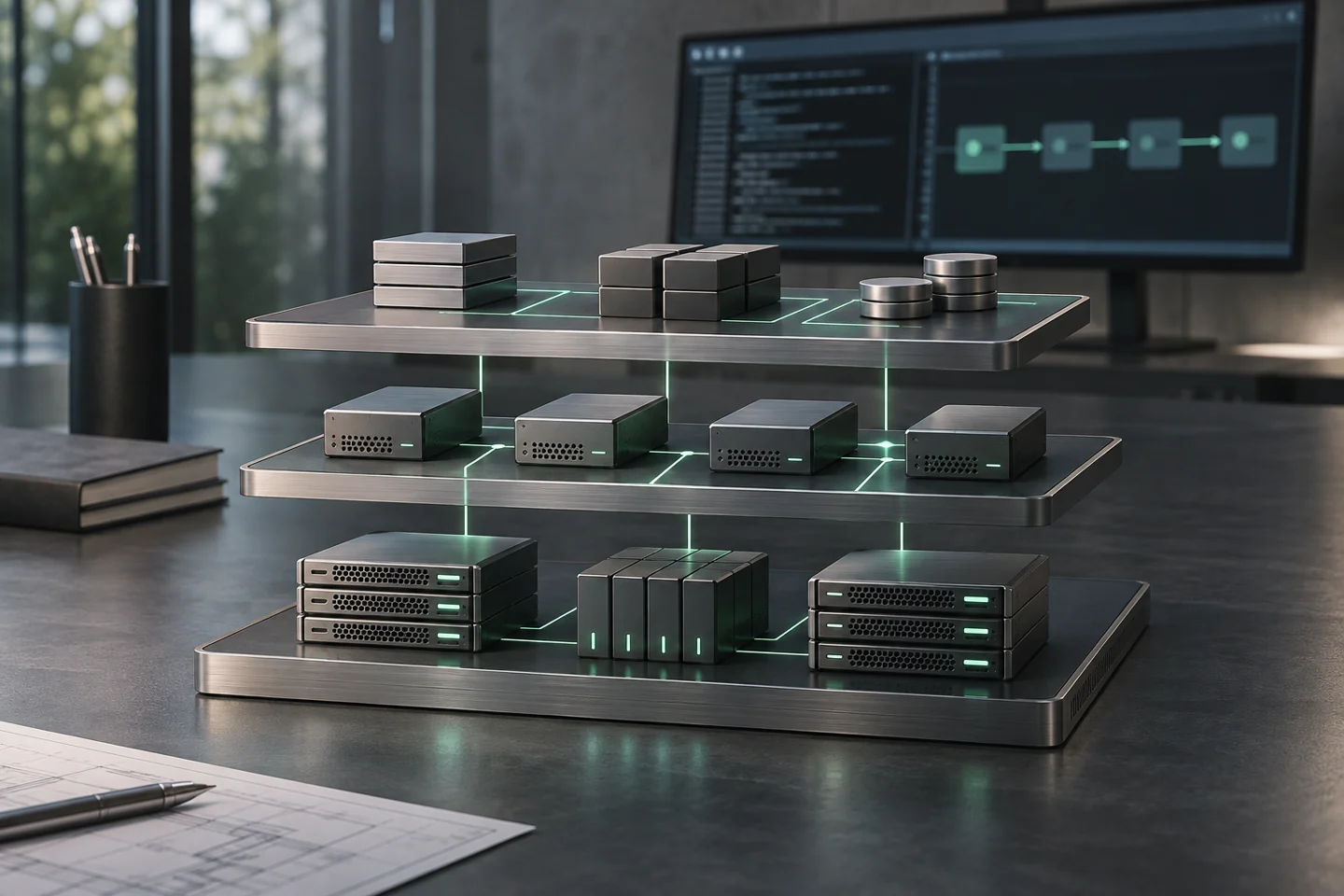
The work went beyond installing tools: it included developing an infrastructure architecture and providing support. Application components, connectivity boundaries, configuration dependencies and operational requirements need to be considered together. Understandable installation automation also makes subsequent changes easier to manage.
Monitoring, log analysis, troubleshooting and change management complement one another within operational support. Availability, disaster recovery and deployment continuity require deliberate design and testing. Operating boundaries and availability objectives should be established at the start.
Connecting applications with the infrastructure they need
DevOps should not be treated as a final step detached from product development. Multi-tenant platforms such as Köprü Mezun and AI assistants such as Borgmain bring different deployment and operating needs. Repeatable infrastructure provides an engineering foundation for these products.
Explore our technology expertise and share your requirements if you need Ansible automation, Jenkins pipeline design, Terraform-based IaC or infrastructure architecture from the ground up.
Turn your idea into a working solution.
Tell us about your project ↗