The purpose: turning alumni relations into a living community
Alumni relations are more than a contact list. Students need ways to connect with experienced graduates, professionals need relevant networks and institutions need ongoing communication with their communities. Köprü Mezun was developed as an alumni network and mentoring platform for this need.
Köprü Mezun brings community communication, alumni engagement and mentoring processes into one product approach. For Saglam Tech, it combines product design, institutional portal development, multi-tenant architecture and a mobile application foundation.
Treating the community experience as one journey
There are many touchpoints between a member’s first login and an ongoing relationship with the platform: profile creation, discovering groups, participating in events and finding mentoring opportunities. These should not feel like unrelated tools. Community feeds, messages, member networks, groups, events, mentoring and career opportunities need a consistent product language.
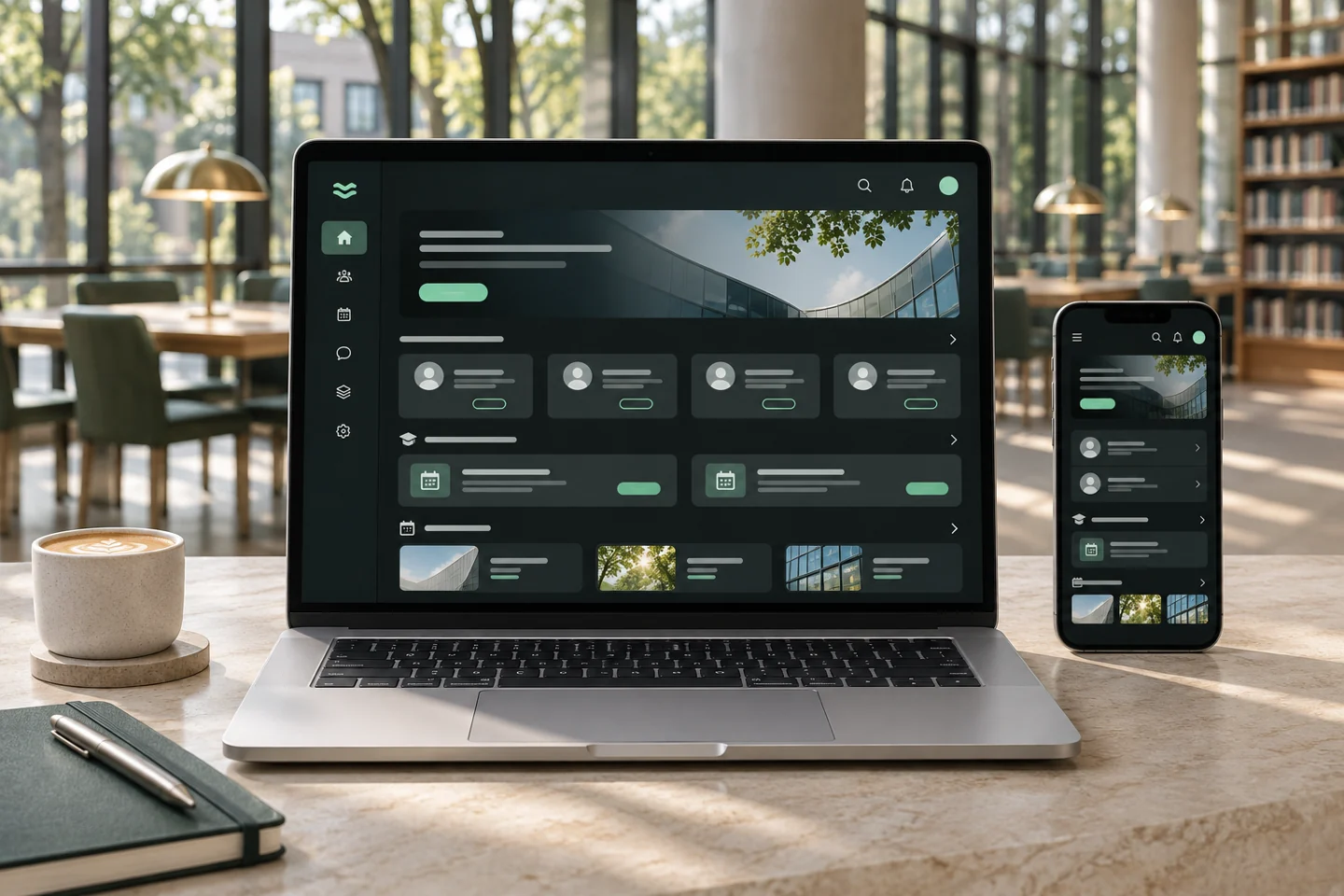
The demo workspace used in our product materials illustrates the feed, groups and events. It explains the experience rather than presenting real membership counts or engagement results. The value of an alumni platform should be assessed through sustained use and the institution’s objectives.
Multi-tenant portal architecture and a control plane
The KopruPortal codebase includes a React, Vite and TypeScript web application, a NestJS and Prisma API, a Keycloak login theme and Docker-based infrastructure. A separate control-plane application supports tenant lifecycle and institutional operations. This addresses a broader architecture problem than simply duplicating one institution’s interface.
In a multi-tenant system, identity, permissions and institutional context cannot be just a choice displayed in the interface. The API and data layers also need consistent tenant boundaries. Onboarding, institutional administration and operational tooling are significant engineering responsibilities alongside the member experience.
A shared product foundation for web, iOS and Android
The web application also provides a shared codebase for mobile. Capacitor-based iOS and Android shells allow the web experience to be managed alongside native project structures. Separating the web build from native synchronisation makes mobile release preparation an explicit workflow.
This approach aims to preserve common behaviour instead of rebuilding every screen three times. Device permissions, platform-specific behaviour and store release steps still require attention. Mobile publishing involves validation and distribution preparation in addition to application development.
Lessons from institutional product engineering
Before adding more features, a community platform needs a clear reason for members to return. Profiles, groups, mentoring and events should reinforce one another, while administrators need understandable ways to manage them. A sustainable product combines user experience with infrastructure operations.
Our SeekCivoAI infrastructure case study examines the operational side, while BtiHome’s smart home application explores product design in another setting. Contact us to discuss custom software or mobile application development.
Turn your idea into a working solution.
Tell us about your project ↗